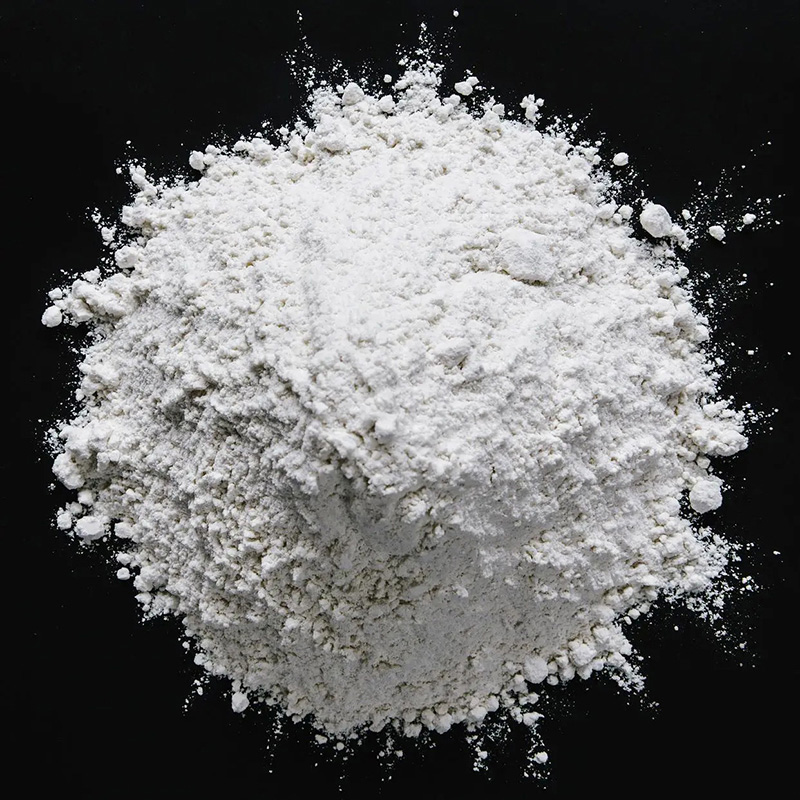
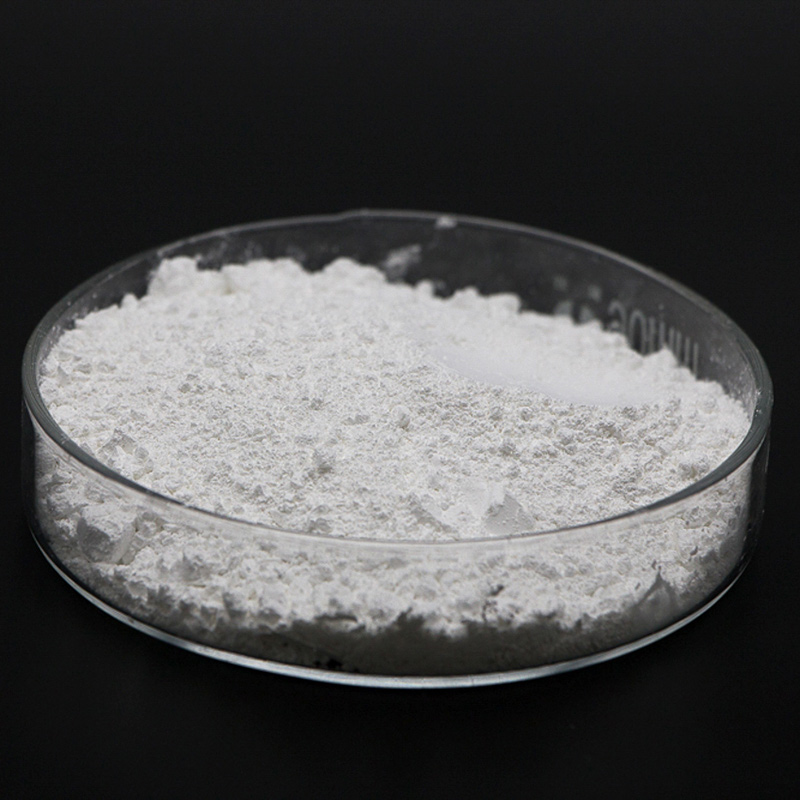
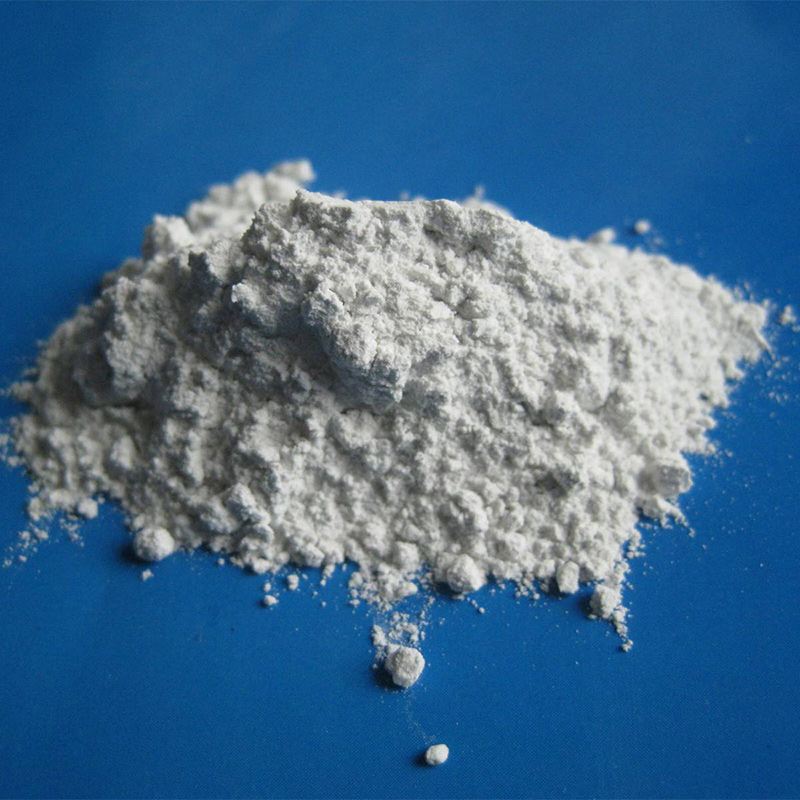
Aluminum oxide CAS#1344-28-1
Heat Resistance & Durability:
With a melting point of 2040°C and boiling point of 2980°C, alumina is ideal for high-temperature applications such as crucibles and abrasive materials.
Hardness & Crystal Structure:
With a Mohs hardness of 8.8, alumina is one of the hardest materials, used in industrial applications like cutting tools and synthetic gemstones.
Industrial Versatility:
Alumina is crucial for bearings, high-speed machinery, and corundum crucibles, capable of withstanding temperatures up to 1800°C in chemical processes.
Chemical Inertness & Safety:
It is chemically inert and insoluble in water, but prolonged exposure to dust can cause lung damage, requiring safety precautions.
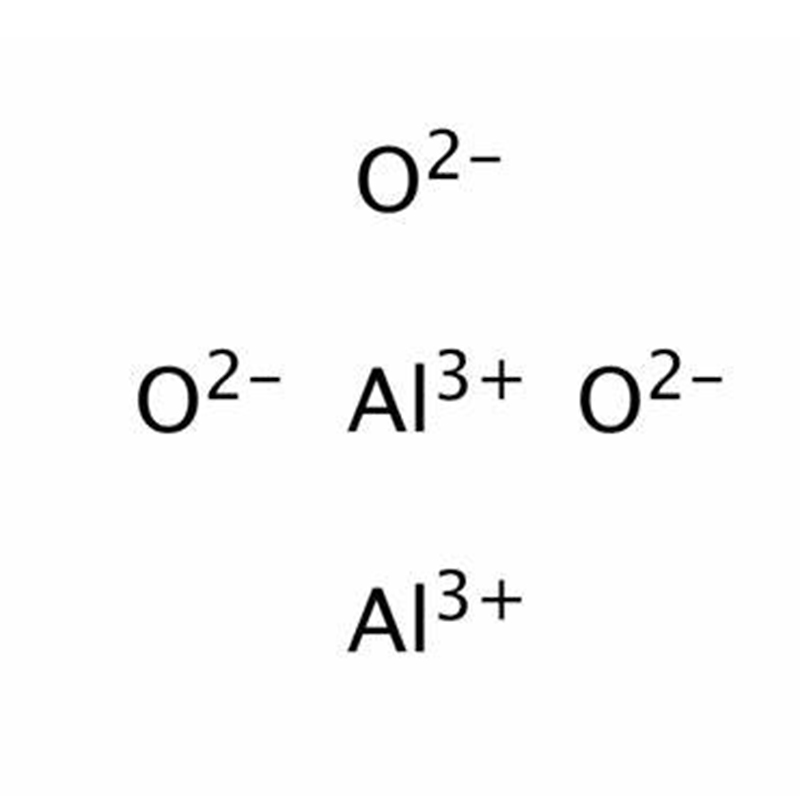
Alumina, chemically represented as Al₂O₃, is widely recognized as bauxite. This white, heat-resistant powder does not dissolve in water. It has a melting point of 2015°C, boiling point of 2980°C, specific gravity of 4.0, and measures 8.8 on the Mohs hardness scale. The compound exists in multiple crystalline structures, with α and γ being the predominant forms.
Production occurs through the thermal dehydration of aluminum hydroxide. In nature, the α-form is known as corundum, a mineral surpassed in hardness only by diamond. When containing trace impurities, corundum develops various colors, creating precious stones like ruby (with traces of Cr³⁺) and sapphire (containing Ti³⁺, Fe²⁺, and Fe³⁺).
Modern technology enables the production of synthetic gems through controlled crystallization of molten alumina. These man-made gemstones match natural ones in quality and find extensive industrial applications. They serve as bearings in high-speed machinery, jewel bearings in timepieces, grinding materials, and heat-resistant components. Corundum crucibles, capable of enduring temperatures up to 1800°C, represent another important application.
Melting point | 2040 °C(lit.) |
Boiling point | 2980°C |
density | 3.97 |
bulk density | 950-1100g/L |
vapor pressure | 17 mm Hg ( 20 °C) |
refractive index | 1.765 |
Fp | 2980°C |
storage temp. | Sealed in dry,Room Temperature |
solubility | Miscible with ethanol. |
form | powder |
color | White to pink |
Specific Gravity | 3.97 |
Odor | Odorless |
PH Range | 3.5 - 4.5 |
PH | 7.0±0.5 ( in H2O) |
Water Solubility | INSOLUBLE |
semiconductor properties | <0001> |
Crystal Structure | Trigonal |
crystal system | Three sides |
Merck | 14,356 |
Space group | R3c |
Lattice constant | a/nmb/nmc/nmα/oβ/oγ/oV/nm30.475890.475891.299190901200.2548 |
Exposure limits | ACGIH: TWA 1 mg/m3 |
Dielectric constant | 4.5(Ambient) |
InChIKey | PNEYBMLMFCGWSK-UHFFFAOYSA-N |
CAS DataBase Reference | 1344-28-1(CAS DataBase Reference) |
NIST Chemistry Reference | Aluminum oxide(1344-28-1) |
EPA Substance Registry System | Alumina (1344-28-1) |
Safety Information
Hazard Codes | Xi,F |
Risk Statements | 36/37/38-67-36/38-11-36 |
Safety Statements | 26-24/25-16-7-36 |
WGK Germany | - |
RTECS | BD1200000 |
F | 3 |
TSCA | Yes |
HazardClass | 8 |
HS Code | 28181010 |
Hazardous Substances Data | 1344-28-1(Hazardous Substances Data) |
Toxicity | Chronic inhalation of Al2O3 dusts may cause lung damage. |