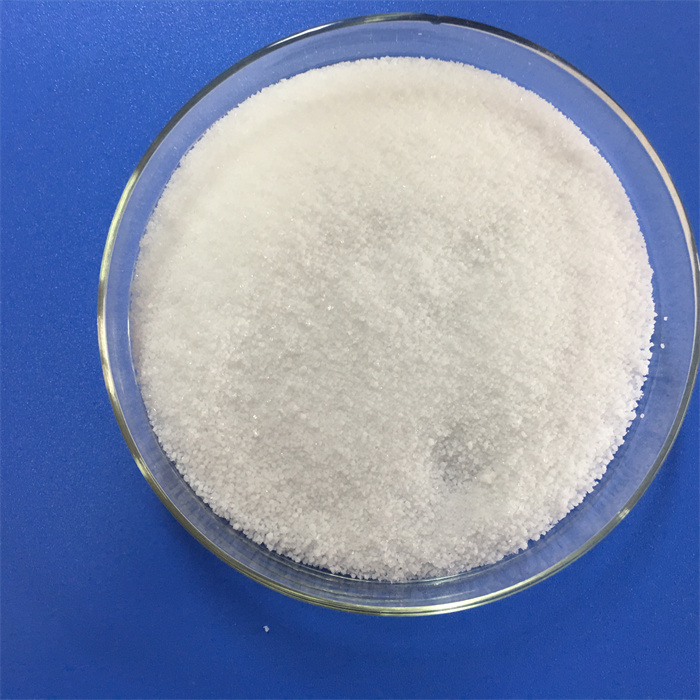
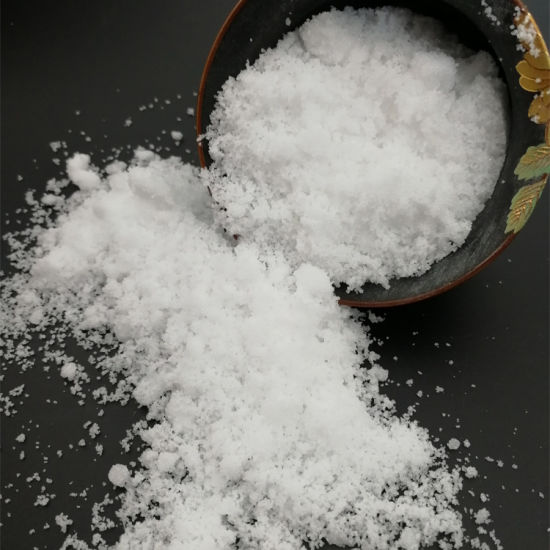
Ammonium bicarbonate
High Nitrogen Content (17.7%) – Efficient nitrogen fertilizer for crops, promoting growth.
Zero Soil Residue – Fully decomposes into CO₂, NH₃, and H₂O, leaving no harmful buildup.
Dual-Action Leavening – Releases CO₂ for food baking (biscuits, flatbreads) at low temperatures.
Fast Soil Availability – Rapidly breaks down, providing immediate nutrients to plants.
Versatile Industrial Use – Used in fire suppression, pharmaceuticals, and chemical synthesis.
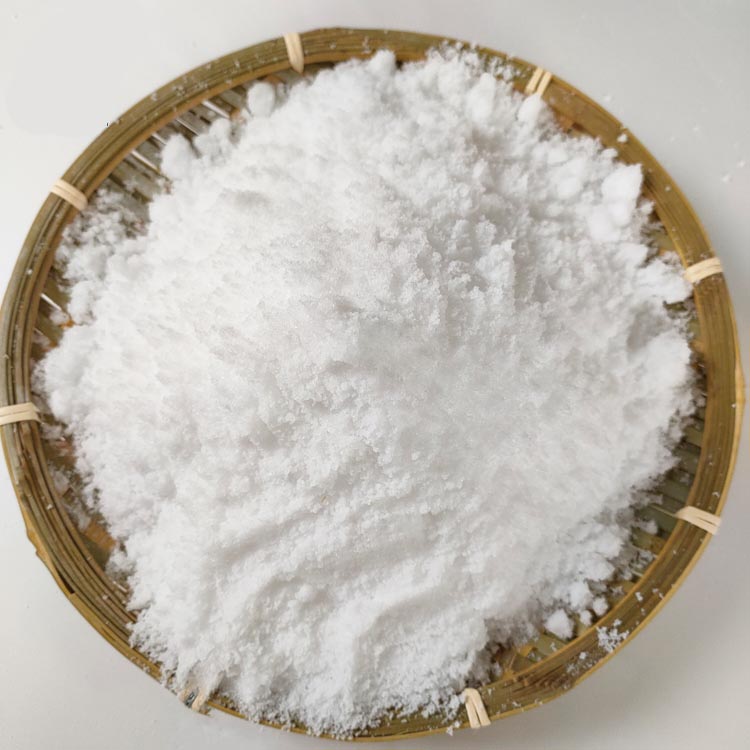
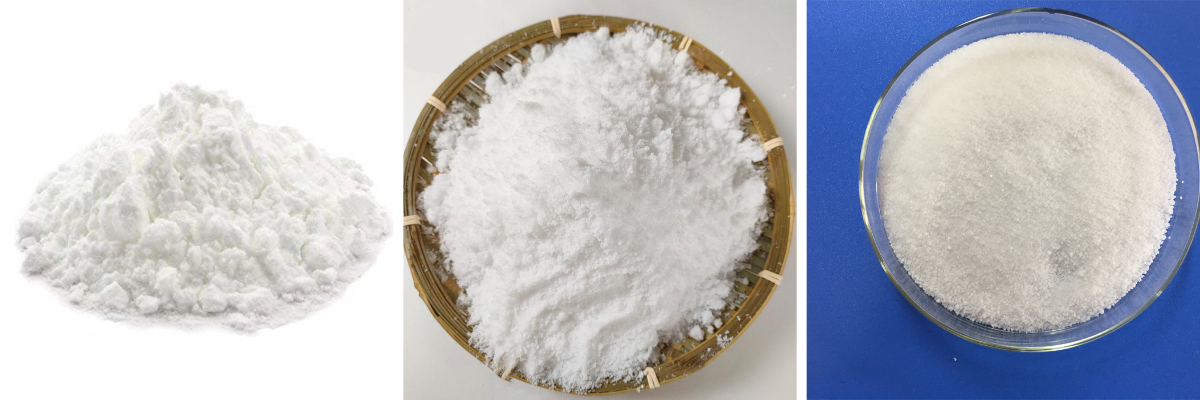
Ammonium bicarbonate is a nitrogen-based chemical fertilizer, also called acidic ammonium carbonate or ammonium hydrogen carbonate, often abbreviated as "carbon ammonium" and colloquially known as "gas fertilizer." It appears as a white powder or crystalline solid with a faint ammonia odor, a relative density of 1.58, and a melting point of 107.5°C (when heated rapidly). It is highly soluble in water, forming a weakly alkaline solution, but does not dissolve in ethanol or acetone. This compound tends to absorb moisture and clump together. Its chemical structure is unstable, gradually breaking down into carbon dioxide, ammonia, and water at room temperature. The rate of decomposition accelerates with higher temperatures and humidity.
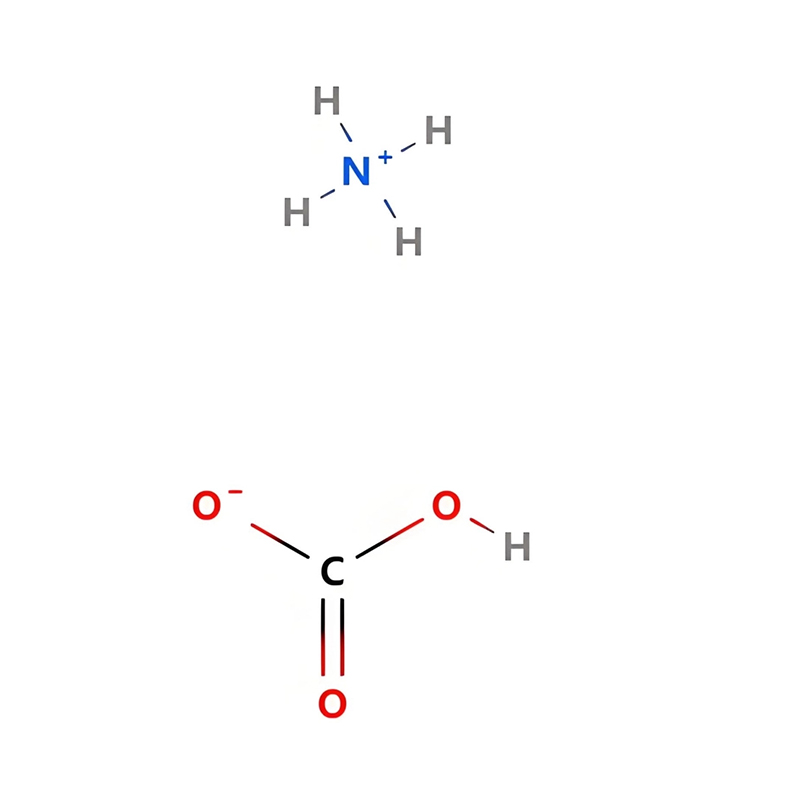
Ammonium Bicarbonate (NH₄HCO₃, CAS 1066-33-7), also termed acidic ammonium carbonate or colloquially "gas fertilizer", is a nitrogen-based compound appearing as white crystalline powder or granules with:
Relative Density: 1.58 g/cm³
Melting Point: 107.5°C (rapid heating)
Ammonia Odor Threshold: 5 ppm
Key Properties & Stability Data
Parameter | Value/Range |
Molecular Weight | 79.06 g/mol |
N Content | 17.7% (theoretical) |
Solubility (20°C) | H₂O: 22.0 g/100mL |
Ethanol: <0.1 g/100mL | |
pH (1% Solution) | 7.8-8.6 (weakly alkaline) |
Decomposition Rate | 0.5%/day @25°C/50% RH |
Heat of Solution | +24.7 kJ/mol (endothermic) |
Industrial Grades & Specifications
Grade | Purity | Key Impurities | Form |
Fertilizer Grade | 95-99% | Chlorides <0.1% | Granules (1-4 mm) |
Food Grade | >99.5% | As<1ppm, Pb<2ppm | Powder (20-100 μm) |
Technical Grade | 92-95% | Sulfates <0.5% | Crystalline |
Reagent Grade | 99.99% | Heavy metals <0.001% | Prills |
Applications
1. Agriculture ("Gas Fertilizer")
Mechanism: Soil decomposition releases CO₂/NH₃ → enhances photosynthesis + nitrogen fixation
Usage: 200-400 kg/ha for rice/wheat; doubles CO₂ concentration near crops
Advantage: Zero soil residue (vs. urea)
2. Food Processing
Leavening Agent:
Biscuits/cookies: 0.5-2% flour weight (releases CO₂ at 40-60°C)
Flatbreads: Creates honeycomb texture
pH Regulator: Adjusts acidity in soy sauce brewing
3. Fire Suppression
Extinguisher Powder: Decomposes to smother flames (Class B/C fires)
4. Chemical Synthesis
Precursor: For (NH₄)₂CO₃ production
Buffering Agent: In dye intermediates
5. Pharmaceuticals
Ammonia Source: Cough syrup expectorant (0.5-2%)
APIs Synthesis: Reagent in cephalosporin antibiotics
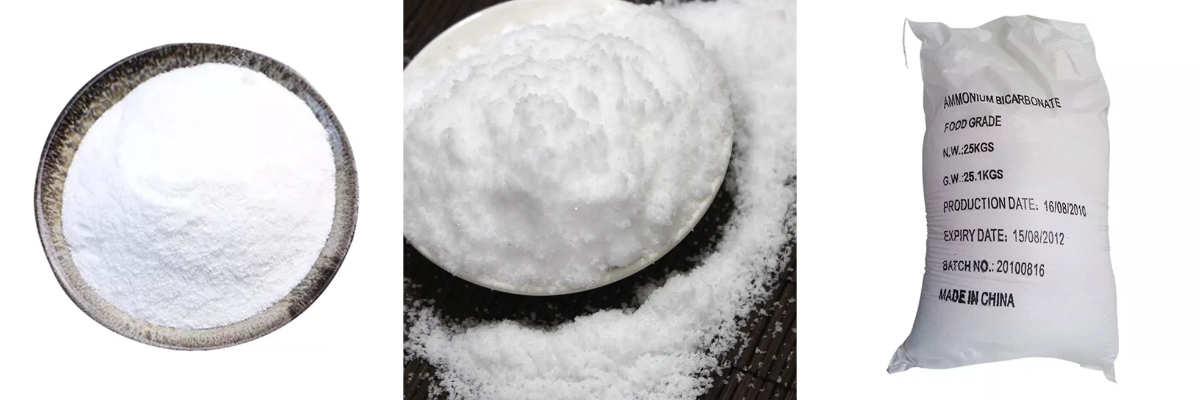
Packaging & Storage
Format | Specifications | Special Measures |
Bags | 25 kg PE-lined woven PP | Double-layer with desiccant |
Drums | 50 kg fiberboard + Al foil barrier | Nitrogen purge |
Bulk | 1 MT super sacks with UV coating | Temperature-controlled transport |
Storage: ≤25°C/≤40% RH; max stacking height: 5 layers | ||
Shelf Life: 12 months (unopened), 3 months after opening |